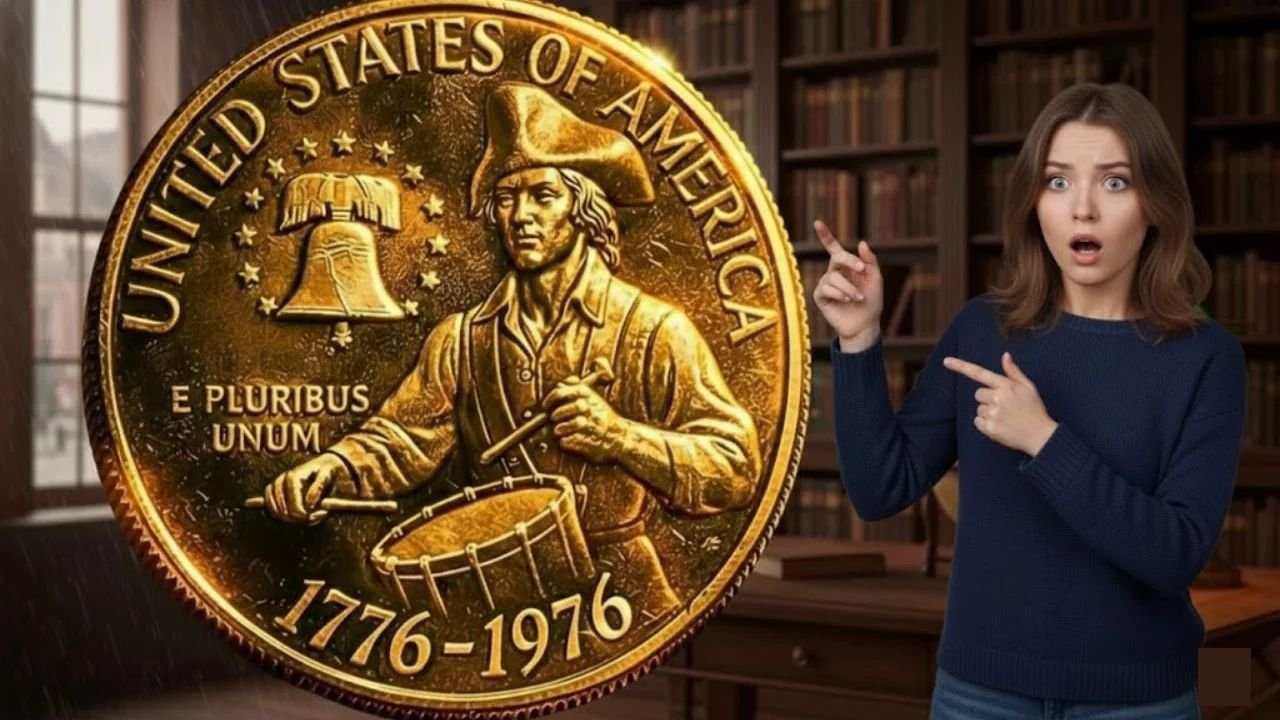
At first glance, a quarter is just spare change—something easily overlooked or tossed into a jar. But for collectors and savvy enthusiasts, certain coins carry stories, history, and sometimes surprising value. One such coin is the 1776–1976 Bicentennial Quarter, a piece that continues to spark curiosity decades after its release.
A Historic Coin Celebrating America’s 200th Birthday
The Bicentennial Quarter was introduced as part of a nationwide celebration marking 200 years since the signing of the Declaration of Independence. Instead of issuing standard coins in 1975, the U.S. Mint released special designs dated “1776–1976” to commemorate the occasion.
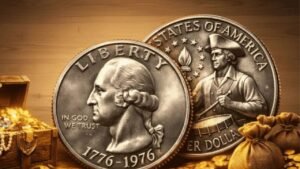
The obverse still features George Washington, maintaining continuity with traditional quarters. However, the reverse received a complete redesign by artist Jack L. Ahr, showcasing a colonial drummer boy alongside a torch encircled by thirteen stars—symbolizing the original colonies.
These coins were minted in large numbers, making them common. Yet, certain variations and conditions can significantly increase their value.
Key Features of the Bicentennial Quarter
Understanding the basics is essential before diving into valuation.
Dual Date
Every Bicentennial Quarter carries the unique “1776–1976” date, regardless of when it was minted.
Distinct Reverse Design
The drummer boy design is the most recognizable feature, setting it apart from standard quarters.
Mint Marks
No mint mark: Philadelphia
“D”: Denver
“S”: San Francisco
Metal Composition
Standard: Copper core with a nickel coating
Special versions: 40% silver (primarily collector editions)
What Determines the Value?
While millions of these coins were produced, only a fraction are worth more than face value. Here’s what separates everyday coins from collectible assets.
Silver Content
The 40% silver versions are among the easiest to identify and value. These were typically minted in San Francisco and sold in collector sets.
Estimated value ranges from $5 to $10 depending on silver prices and condition. A quick way to identify them is by checking the edge. Silver coins do not have the brown copper stripe seen in standard quarters.
Condition and Grading
Condition plays a critical role in coin valuation. Coins are graded on a scale, with higher grades indicating minimal wear.
Circulated coins are usually worth face value. Uncirculated coins can range from $10 to $30 or more. High-grade examples with near-perfect surfaces can command significantly higher prices.
Mint Mark Significance
Coins with an “S” mint mark are often more valuable, especially if they are proof or silver issues.
Proof coins are struck with special dies and polished surfaces, giving them a mirror-like finish. These were never intended for circulation, making them more collectible.
Mint Errors: The Real Game-Changer
The most valuable Bicentennial Quarters are often those with minting errors. These imperfections make each coin unique and highly sought after.
Doubled die errors show letters or numbers appearing doubled due to misalignment during striking. Off-center strikes occur when the design is shifted, leaving part of the coin blank. Wrong planchet errors happen when a quarter is struck on a blank meant for another coin, such as a dime.
These rare variations can be worth hundreds or even thousands of dollars depending on rarity and condition.
How to Check Your Bicentennial Quarter
If you want to evaluate your coin like a professional, follow these simple steps.
First, confirm the date reads “1776–1976.”
Next, examine the reverse for the drummer boy design.
Then, locate the mint mark near Washington’s ponytail.
After that, inspect the edge for a copper stripe or solid silver color.
Finally, look closely for any unusual errors using a magnifying glass.
Market Value: What Can You Expect?
Common circulated coins are worth $0.25. Uncirculated examples can range from $10 to $30. Silver versions typically fall between $5 and $10 or more. Error coins can range from $100 to over $15,000 depending on rarity and condition.
Exceptional pieces, especially those professionally graded, can achieve premium auction prices.
Smart Collector Tips
Never clean coins, as this can instantly reduce their value. Store them properly in protective holders or albums. Handle coins by the edges to avoid fingerprints. If you believe you have a rare piece, consider professional grading for authentication and accurate valuation.
Why the Bicentennial Quarter Still Matters
Beyond its monetary value, the Bicentennial Quarter represents a unique moment in history. It reflects national pride, artistic creativity, and a departure from traditional coin design.
For collectors, it offers an accessible entry point into numismatics. For investors, it presents occasional opportunities to discover hidden value. For everyday individuals, it serves as a reminder that even small, overlooked objects can hold surprising worth.
Final Thoughts
The 1776–1976 Bicentennial Quarter may be one of the most recognizable coins in modern history, yet it continues to captivate collectors worldwide. While most remain worth just 25 cents, a select few carry hidden value waiting to be uncovered.
The next time you receive change, take a closer look. That ordinary quarter might just turn out to be something extraordinary.